유발 하라리의 (사피엔스) 읽고.. 익숙한 세상을 낯설게 바라보다
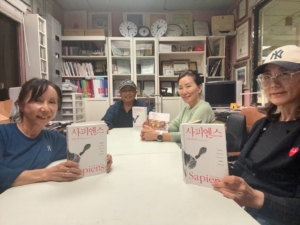
10월 독서모임의 선정 도서는 유발 하라리의 (사피엔스)였다. 오래전에 사서 100페이지쯤 읽다가 덮고는 책장 한편에 명품처럼 모셔 둔 책이다. 볼 때마다 ‘언젠가는 꼭 읽어야지’ 했는데, 이번 독서모임 덕분에 드디어 끝까지 읽었다.
하라리는 인지혁명, 농업혁명, 인류의 통합, 과학혁명이라는 네 가지 흐름으로 인류의 역사를 풀어낸다. 처음에는 딱딱한 논문을 읽는 기분이었다. 그런데 한 장 한 장 넘길수록 기발한 비유와 생생한 이야기에 빠져들었다. 인상적인 문장마다 밑줄을 긋다 보니 나중에는 어디가 중요한지 구별하기 어려울 정도였다.
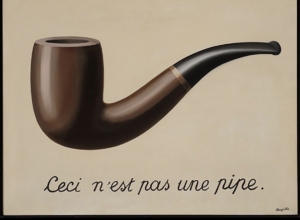
읽는 동안 서양미술사에서 배웠던 데페이즈망(Dépaysement)이 떠올랐다. 익숙한 사물을 낯선 곳에 놓아 새로운 의미를 발견하게 하는 초현실주의 기법이다. 르네 마그리트의 (이미지의 배반)에는 파이프 그림 아래 “이것은 파이프가 아니다”라고 쓰여 있다. 아니, 누가 봐도 파이프인데? 다시 보니 내가 보고 있는 건 파이프를 그린 그림이다. 그처럼 (사피엔스)는 내가 이미 안다고 생각했던 역사를 다시 보게 했다.
농업혁명 이야기가 그랬다. 우리는 인간이 밀을 길들였다고 생각한다. 그런데 하라리는 “밀이 인간을 길들였다”고 말한다. 밀을 기르기 위해 사람은 한곳에 정착하고 더 많은 일을 해야 했다. 양 이야기에서는 인간이 다루기 쉬운 양을 골라 여러 세대에 걸쳐 길들인 과정을 설명하다가, 메리가 가는 곳마다 어린 양이 따라가는 동요 (Mary Had a Little Lamb)를 끌어온다. 농업혁명 이야기에서 이 노래를 만날 줄이야.
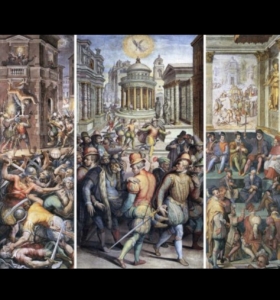
뒷담화에 대한 해석도 재미있었다. 누가 믿을 만한 사람인지 서로 이야기하는 일이 공동체의 협력에 도움이 되었다는 것이다. 종교와 국가, 화폐에 대한 공동의 믿음은 서로 모르는 사람들까지 협력하게 했다. 종교를 다룬 대목에서는 1572년 프랑스에서 일어난 성 바르톨로메오 축일 학살도 나온다. 교황의 의뢰로 조르조 바사리가 그린 벽화는 바티칸 사도궁의 살라 레지아(Sala Regia)에 있다. 하라리는 이 방이 일반 관람객에게 공개되지 않는다고 적었다. 그 대목을 읽고 나니 바티칸에 가 봤는데도 왜 그 벽화를 본 기억이 없는지 이제야 알 것 같았다.
제4부 과학혁명, 제14장 (무지의 발견)에서는 통계학 이야기가 마음에 남았다. 1744년 스코틀랜드의 두 목사는 세상을 떠난 목사들의 아내와 자녀를 돕기 위해 기금을 마련하려 했다. 두 사람은 사망률 자료를 바탕으로 기금 규모를 계산했다. 1765년 실제 기금은 예측과 단 1파운드 차이였다. 하라리는 두 목사의 계산이 (요한계시록)에 나오는 요한의 예언보다도 더 정확했다고 말한다. 나는 이 대목에서 모른다는 사실을 인정하고 관찰과 계산으로 답을 찾아가는 것이 과학혁명의 출발점이라는 생각이 들었다.
그 순간 둘째 딸 에니가 떠올랐다. UCLA에서 4년 동안 통계학을 전공할 때만 해도 나는 ‘왜 하필 통계학이지? 졸업하면 무슨 일을 할 수 있을까?’ 하고 생각했다. 그러나 지금은 에니는 인텔(Intel)에서 인공지능 에이전트(AI Agent)를 개발한다. 18세기에는 기금의 미래를 내다보는 데 쓰였던 통계가 오늘날에는 인공지능을 뒷받침하는 학문이 되었다. 딸은 이미 자기 길을 걷고 있었고, 나는 이제야 그 선택의 가치를 알아봤다.
발레도 그렇다. 늘 수업에서 하는 플리에(Plié)가 무대에서는 부드러운 순응이 되기도 하고 강한 저항이 되기도 한다. 음악과 감정이 달라지면 익숙한 동작도 다른 춤이 된다. 내가 작품을 만들 때 늘 하던 동작을 다시 들여다보는 이유다.
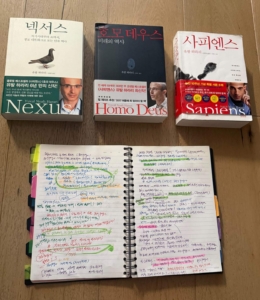
책의 마지막에서 하라리는 큰 힘을 얻은 인류가 과연 더 행복해졌는지, 정작 무엇을 원하는지 알고 있는지 묻는다. 책을 덮으며 나도 물었다. ‘나는 앞으로 무엇을 원하는가?’ 아직 모르는 것을 배우고, 평생 해 온 발레에서도 새로운 아름다움을 발견하고 싶다. 그리고 내 책장에는 사 놓고 아직 다 읽지 못한 하라리의 (넥서스)와 (호모 데우스)가 있다. 이번에 (사피엔스)를 끝까지 읽었듯이, 그 두 권도 한 권씩 꺼내 끝까지 읽어 볼 생각이다. 이번에는 또 어떤 익숙한 이야기가 낯설게 보일지 궁금하다.
- Reading Yuval Noah Harari’s (Sapiens) — Seeing the Familiar Anew
- Our book club chose Yuval Noah Harari’s (Sapiens) for October. I had bought it years ago, read a hundred pages or so, and put it down. Ever since, it had occupied a place of honor on my bookshelf, like a prized possession. Whenever I passed it, I would think, “Someday I really must read that book.” Thanks to the book club, I finally did, from beginning to end.
- Harari tells the history of humankind through four sweeping developments: the Cognitive Revolution, the Agricultural Revolution, the Unification of Humankind, and the Scientific Revolution. At first, I felt as though I were reading a dry academic paper. But page by page, his unexpected comparisons and vivid stories drew me in. I underlined so many sentences that by the end, I could hardly tell which passages I had meant to single out.
- As I read, I remembered a term from my studies in Western art history: dépaysement. In Surrealist art, placing something familiar in an unfamiliar setting can open it to new meanings. I thought of René Magritte’s (The Treachery of Images). Beneath the image of a pipe are the words “This is not a pipe.” My first reaction is still, “Of course it’s a pipe. What else could it be?” Then I look again and realize I am looking at a painting of a pipe. That small moment of hesitation captures what reading (Sapiens) felt like. Harari made me look again at a history I thought I knew.
- Take the Agricultural Revolution. We tend to think humans domesticated wheat. Harari turns the idea around: wheat domesticated us. To grow it, people settled in one place and took on more work. When he describes how humans domesticated sheep by selecting animals that were easier to manage, he brings in the nursery rhyme (Mary Had a Little Lamb), in which the lamb follows Mary wherever she goes. Of all the places to run into that little lamb, I never expected to find it in a chapter on the Agricultural Revolution.
- His discussion of gossip amused me too. Talking about who could be trusted, he suggests, helped people learn how to cooperate. Shared beliefs in religion, nations, and money made cooperation possible even among strangers. In his discussion of religion, Harari recounts the St. Bartholomew’s Day Massacre in France in 1572. The frescoes Giorgio Vasari painted at the pope’s request are in the Sala Regia of the Vatican’s Apostolic Palace. Harari writes that the room is closed to ordinary visitors. I had been to the Vatican, yet I had no memory of seeing those frescoes. Reading that passage, I felt I finally understood why.
- Of all the examples in Part Four, the Scientific Revolution, the one that stayed with me came from Chapter 14, (The Discovery of Ignorance). In 1744, two Scottish ministers set out to establish a fund for the widows and children of deceased clergy. Using mortality data, they calculated how much money the fund would hold. In 1765, the actual sum came within a single pound of their prediction. Harari remarks that their calculations proved more accurate than John’s prophecies in the Book of Revelation. The story made me pause over what it means to admit ignorance. Once the ministers acknowledged what they did not know, they could ask what evidence might help them find out.
- At that moment, I thought of my second daughter, Annie. When she spent four years studying statistics at UCLA, I remember wondering, “Why statistics? What kind of work will she do after graduation?” Today, Annie develops AI agents at Intel. In the eighteenth century, statistics helped two ministers work out how much money families would need. Today, statistical thinking helps lay the groundwork for artificial intelligence. My daughter had been making her way toward that future all along. It had taken me this long to see what she saw in the subject.
- I recognize something of this in ballet. A plié, the bend of the knees we practice in every class, can suggest a quiet yielding or a fierce resistance onstage. A change in music or feeling can give the same movement a different meaning. When I choreograph, I often begin by looking again at a step I have performed countless times.
- Toward the end of the book, Harari asks whether the power humanity has acquired has made us any happier, and whether we even know what we want. I closed the book and asked myself, “What do I want from here on?” I want to keep learning and to discover forms of beauty I have yet to see in the ballet I have practiced all my life. On my bookshelf are two more books by Harari, (Nexus) and (Homo Deus), which I bought and have yet to finish. I intend to take them down, one at a time, and read each to the end. I wonder what familiar thing will look different to me next.


- koadance.org
- balletjean.com
- 한미무용연합진발레스쿨
- 6th Street #607. LA CA 90020
- Tel: 323-428-4429
#한미무용연합회진발레스쿨 #진최무용이야기 #유발하라리 #사피엔스 #익숙한세상을낯설게바라보다
#KOADanceFederationJeanBalletSchool #JeanChoiDanceStories #YuvalNoahHarari #Sapiens #SeeingTheFamiliarAnew