카르멘의 선율 위에, 나만의 춤
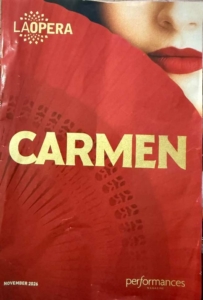
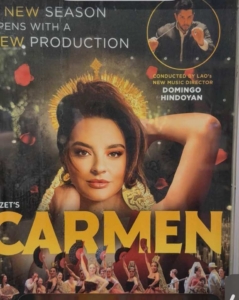
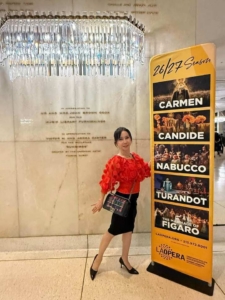
지난 4월, LA 오페라에서 시즌 티켓 안내 이메일을 받았다. 소개된 다섯 작품이 하나같이 보고 싶은 수준 높은 작품이라 망설이지 않고 예매했다. 첫 무대를 장식한 작품은 비제의 (카르멘)이었다.
십여 년 전인가? LA 오페라에서 본 무대는 가물가물했지만, 제목만 들어도 그때의 감동이 되살아나는 듯했다. 실버발레에서 직접 안무해 무대에 올린 작품이라 내게는 더 각별했다.
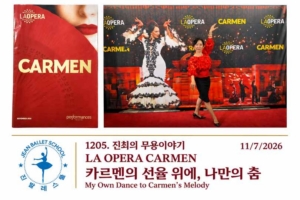
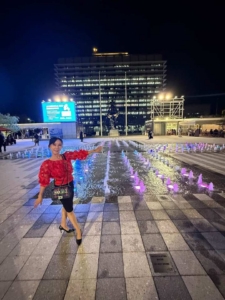
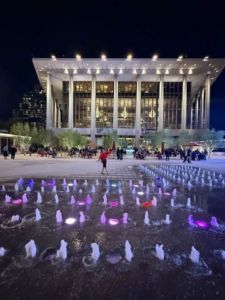
카르멘 그 이름을 들으면 살로메처럼 치명적인 매력을 지닌 팜므파탈이 떠오른다. 붉은 드레스 차림에 장미 한 송이를 입에 문, 요염하고 당당한 여인이다. 공연을 앞두고 줄거리를 다시 읽고 (하바네라)를 들었다. 그날 나도 그녀처럼 붉은 옷을 입고 뮤직센터로 향했다.
조르주 비제의 이 4막 오페라는 1875년 파리에서 초연됐다. 배경은 스페인 세비야다. 여성이 자기 삶을 스스로 정하기 어려웠던 시절, 담배 공장 여공 카르멘은 누구도 자신의 삶을 대신 정하게 두지 않으려 했다. 돌아오라는 요구를 거절당한 돈 호세는 질투와 집착 끝에 투우장 밖에서 그녀를 찔러 죽인다.
막이 오르자 프렐류드가 힘차게 울려 퍼지자 실버발레 학생들과 맞추던 발걸음이 되살아났다. 마음속의 나는 이미 무대 위에서 춤을 추고 있었다.
그런데 웬걸. 어둠 속에 거대한 철문이 서 있었다. 파란 작업복 차림의 여공들이 모습을 드러내자 지난 세기 미국의 공장에서 일하던 여성들이 떠올랐다. 동료들 사이에 선 카르멘은 당당했다.
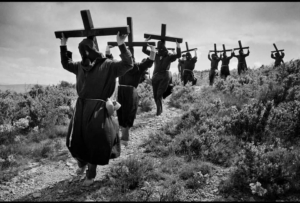
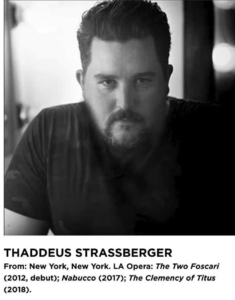
연출가 태디어스 스트라스버거는 스페인 사진가 크리스티나 가르시아 로데로의 사진집 (숨겨진 스페인)에서 영감을 받았다고 한다. 거실의 텔레비전에서는 축구 중계가 흘러나왔고, 촛불을 든 성주간 행렬이 같은 무대를 지나갔다. 공동묘지에는 헬리콥터에서 밀수품 꾸러미가 떨어졌다. 비제의 음악이 흐르는 세비야에 오래된 의식과 현대의 일상이 겹쳐졌다.
. 방 하나가 통째로 움직이고, 조명과 영상이 공간의 표정을 바꾸었다. 성악가와 어린이 합창단, 무용수와 관현악단, 무대 뒤 스태프까지 백 명은 넘어 보였다. 그 많은 사람이 저마다의 자리에서 힘을 모아 한 편의 카르멘을 탄생시켰다. 서로 다른 재능과 감각이 한 무대에 모여 새로운 세계를 빚어내는 것, 그것이 예술의 힘이다.
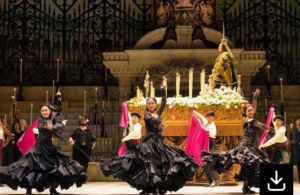
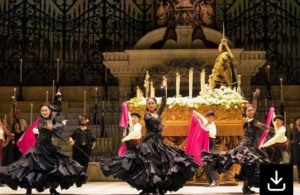
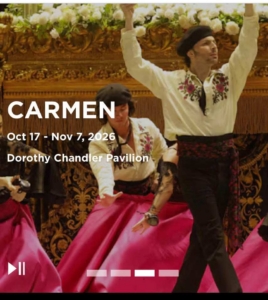
객석에는 빈자리가 하나도 보이지 않았다. 같은 공연을 보아도 저마다 마음을 빼앗기는 순간은 다를 것이다. 독창이 이어지는 동안 등받이에 기대 있던 나는 2막 술집에서 안토니오 나하로가 안무한 스페인 춤이 시작되자 나도 모르게 몸을 앞으로 당겨 앉았다. 악단 소리가 잦아들자 발 두드림과 손뼉만으로 음악이 만들어졌다. 그 박자가 내 몸의 기억을 깨웠다. 무용을 가르치는 내게는 그 순간이 이날의 하이라이트였다.
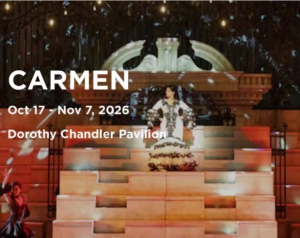
카르멘이 두른 검은 망토의 자락은 무대 앞에서 뒤까지 길게 펼쳐져 있었다. 그 위로 검붉은 꽃잎처럼 보이는 장식이 흩뿌려져 있었다. 원형 무대가 천천히 한 바퀴 돌았다. 그녀는 망토를 벗고 나가려다 돈 호세의 칼에 쓰러졌다. 내게 그 회전은 벗어나려 해도 같은 자리로 돌아오는 삶의 수레바퀴 같았다.
- S. 엘리엇은 (전통과 개인의 재능) 에서 과거의 작품이 오늘의 예술에 영향을 주듯, 새로운 작품도 우리가 과거를 바라보는 눈을 바꾼다고 했다. 이번 무대를 보고 나니 오래전 만났던 카르멘도 달리 보였다. 자기 삶을 끝까지 스스로 정하려는 한 여인의 모습이 오래 남았다. 나만의 춤을 춘다는 건 내 삶을 내 빛깔로 살아가는 일이다.
집으로 돌아오는 길에 문득 생각했다. 백오십일 년 전 카르멘을 처음 선보인 비제가 오늘 LA 뮤직센터 객석에 앉아 있었다면, 그도 나처럼 익숙한 선율 속에서 미처 보지 못했던 또 다른 카르멘을 만났을까?
To Carmen’s Music, I Dance My Own Dance
By Jean Choi
Last April, an email arrived from LA Opera announcing its new season. Every one of the five works on the program was something I wanted to see, so I bought a subscription without hesitation. The season opened with Georges Bizet’s Carmen.
Had it been more than ten years since I last saw Carmen at LA Opera? The details of that production had grown hazy, but the title alone brought back something of what I had felt that night. The work had since become more personal. I had choreographed a Carmen of my own and brought it to the stage with my senior ballet students.
The name Carmen calls to mind a femme fatale with the dangerous allure of Salome. I picture her in a red dress, a rose between her teeth, seductive and self-possessed. Before the performance, I reread the synopsis and listened to the “Habanera.” That evening, I put on something red myself and headed to the Music Center.
Bizet’s four-act opera premiered in Paris in 1875. Its story takes place in Seville, Spain, at a time when women had little say over the course of their lives. Carmen, a worker in a cigarette factory, insists on deciding how she will live. When she refuses to return to Don José, his jealousy and obsession lead him to stab her outside the bullring.
As the curtain rose and the prelude rang out, I remembered the steps I had rehearsed with my senior ballet students. In my mind, I was already dancing onstage.
Then I saw the enormous iron gate standing in the dark. When the women appeared in blue work clothes, I thought of photographs of American factory workers from the last century. There among her coworkers stood Carmen, entirely at ease in her own skin.
Director Thaddeus Strassberger drew inspiration from Hidden Spain, a book by the Spanish photographer Cristina García Rodero. A soccer match played on a living-room television. A candlelit Holy Week procession crossed the same stage. In a cemetery, bundles of contraband dropped from a helicopter. Against Bizet’s score, old rituals and the ordinary details of modern life inhabited the same Seville.
An entire room moved across the stage. Light and video changed the character of the space around it. Between the singers, the children’s chorus, the dancers, the orchestra, and the crew backstage, there seemed to be more than a hundred people involved. Each had a part in bringing this Carmen into being. For a few hours, the work of all those hands and voices gave us a world we could enter together.
I couldn’t see an empty seat in the house. I wondered which moments would stay with the people around me. I had been leaning back during the arias, but when Antonio Najarro’s Spanish choreography began in the second-act tavern scene, I found myself sitting forward. The orchestra quieted, and the dancers made music with the strike of a heel and the clap of a hand. My body recognized the rhythm before I had time to think about it. Of all the evening’s music, that was the passage I carried home most vividly.
Near the end, Carmen’s black cloak stretched almost the full depth of the stage. Across it lay what looked like dark red petals. The circular platform made one slow revolution. Carmen slipped out of the cloak and tried to leave, then fell beneath Don José’s knife. That slow turn stayed with me. I could see her trying to get away even as the stage carried her back to where she had begun.
In “Tradition and the Individual Talent,” T. S. Eliot suggests that earlier works shape what artists create today, and that a new work can, in turn, change how we see the works that came before it. This production changed my memory of the Carmen I had seen years ago. I went to the theater with the image of a woman in red, a rose between her teeth. I left thinking about a woman who held on to her right to choose, even in her last moments. For me, dancing my own dance means having a say in the shape my life takes.
On the way home, a question came to me. If Bizet, who first brought Carmen to the stage 151 years ago, had been sitting in the audience at the Music Center that night, would he, too, have met a Carmen he had never seen before, in music he knew by heart?



- koadance.org
- balletjean.com
- 한미무용연합진발레스쿨
- 3727 West. 6th Street #607. LA CA 90020
- Tel: 323-428-4429
#한미무용연합회 #진발레스쿨 #진최의무용이야기 #LA오페라카르멘 #LA뮤직센터
#KOADanceFederation #JeanBalletSchool #JeanChoiDanceColumn #LAOperaCarmen #TheMusicCenter