춤은 문학을 품고 춘다 ― 밀란 쿤데라의 『농담』을 읽고
춤을 추는 동안 나는 한 사람의 삶이 아니라 수많은 인생을 살아간다. 무대에 오를 때마다 나는 『백조의 호수』의 가련한 백조 공주 오데트가 되기도 하고, 시골 처녀의 순수함을 간직한 지젤이 되기도 한다. 때로는 비련의 여인 안나 카레니나가 되기도 하고, 팜므파탈의 치명적인 매력으로 인간의 욕망을 흔드는 살로메가 되기도 한다. 춤은 몸으로 움직이는 예술이지만, 그 몸짓 속에는 문학과 신화, 역사와 철학이 함께 살아 숨 쉰다.
그래서 나는 춤을 출수록 책을 더욱 가까이하게 되었고, 책을 읽을수록 춤은 더욱 깊어진다. 문학은 인간의 삶을 이야기로 들려주고, 무용은 그 삶을 몸의 언어로 다시 표현하기 때문이다.
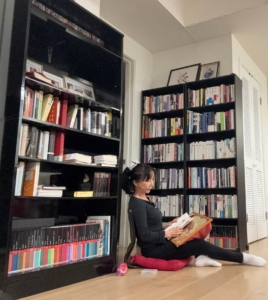
매월 첫째 금요일, 진발레스쿨에서는 TTBC(Timeless Together Book Club), ‘시간을 잇는 북클럽’이 열린다. 한 달에 한 번 시대를 초월한 명작을 함께 읽고 생각을 나누는 독서모임이다. 과거의 명작과 오늘을 살아가는 우리를 이어 준다는 의미를 담고 있어 나는 이 이름을 무척 좋아한다.
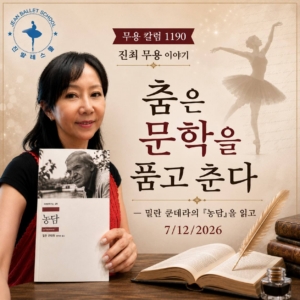
6월 북클럽에서 함께 읽은 작품은 밀란 쿤데라의 『농담』이었다. 한 줄의 농담이 한 사람의 운명을 뒤바꾸는 이야기지만, 책장을 덮고 난 뒤 오래 남은 것은 정치가 아니라 인간에 대한 질문이었다. 쿤데라는 같은 사건도 사람마다 다르게 기억하고, 다르게 해석한다는 사실을 보여주며 타인을 완전히 이해한다는 것이 얼마나 어려운 일인지를 이야기한다.
이번 토론에서 가장 흥미로웠던 것은 ‘헬레나’라는 이름이었다. 처음에는 평범한 이름이라고 생각했지만, 이야기를 나누다 보니 그 이름은 시대를 건너 우리 앞에 다시 나타났다. 트로이 전쟁의 원인이 되었던 절세의 미인 헬레네, 괴테의 『파우스트』에서 인간이 갈망하는 영원한 아름다움으로 다시 태어난 헬레네, 그리고 쿤데라의 『농담』 속 평범한 여인 헬레나까지. 같은 이름은 시대마다 다른 모습으로 살아왔지만, 결국 인간의 사랑과 욕망, 이상과 현실을 비추는 거울이었다. 한 사람의 이름이 수천 년의 문학과 신화를 이어 준다는 사실은, 고전이 결코 과거에 머물러 있지 않다는 것을 새삼 깨닫게 했다.
무용도 다르지 않다. 무대 위에서 우리는 사랑하고, 기다리고, 용서하고, 절망하며 수많은 인생을 살아낸다. 그러나 그 모든 움직임의 출발점은 화려한 테크닉이 아니라 인간에 대한 이해이다. 인물을 이해하지 못하면 춤은 동작으로 끝나지만, 인간을 이해하는 순간 춤은 비로소 예술이 된다.
한 권의 명작은 읽는 순간 끝나는 것이 아니다. 우리의 생각 속에 머물고, 삶 속에서 다시 살아나며, 예술 속에서 새로운 움직임으로 이어진다. 아마 이것이 TTBC독서모임이 시간을 건너 고전과 오늘의 우리를 이어 주는 이유이며, 내가 춤을 추면서도 계속 책을 가까이하는 이유일 것이다.
무용은 몸으로 쓰는 문학이고, 문학은 마음으로 추는 춤이다. 표현은 달라도 두 예술이 향하는 곳은 결국 하나다. “한 사람의 이름이 수천 년의 문학과 신화를 이어준다는 사실은, 고전이 결코 과거에 머물러 있지 않다는 것을 새삼 깨닫게 했다.”
인간을 이해하는 일. 어쩌면 예술은 우리를 더 뛰어난 사람이 아니라, 더 깊은 사람으로 성장시키는 가장 아름다운 여정이 아닐까?
Dance Embraces Literature
Reflections on Reading Milan Kundera’s The Joke
When I dance, I do not live just one life—I live countless lives.
Each time I step onto the stage, I become Odette, the tragic Swan Queen of Swan Lake. I become Giselle, the innocent village girl whose love transcends death. At times I become Anna Karenina, a woman consumed by passion and fate, or Salome, the irresistible femme fatale whose beauty and desire alter the course of human lives.
Dance is an art expressed through the body, yet within every movement breathe literature and mythology, history and philosophy.
The more I dance, the more I am drawn to books. And the more I read, the deeper my dancing becomes. Literature tells the stories of human life through words, while dance retells those same stories through the language of the body.
On the first Friday of every month, Jean Ballet School hosts the TTBC (Timeless Together Book Club), a gathering where we read timeless literary classics and share our thoughts. I have always loved the name because it reflects the idea of connecting great works of the past with those of us living today, allowing conversations to transcend time.
Our June selection was Milan Kundera’s The Joke. Although the novel begins with a single joke that changes the course of one man’s life, what remained with me long after finishing the book was not its political background, but its profound questions about human nature. Kundera reminds us that the same event is remembered differently by different people and interpreted through entirely different perspectives. In doing so, he reveals how difficult it is to truly understand another human being.
The most fascinating part of our discussion was the name Helena.
At first, it seemed like nothing more than an ordinary name. But as our conversation unfolded, Helena reappeared across centuries of literature. She was Helen of Troy, whose legendary beauty ignited the Trojan War. She was Helena in Goethe’s Faust, reborn as the embodiment of eternal beauty that humanity endlessly longs for. And she was Helena in Kundera’s The Joke, an ordinary woman living in modern times.
The same name has taken on different forms throughout history, yet it has consistently reflected humanity’s love, desire, ideals, and reality. The realization that a single name can bridge thousands of years of literature and mythology reminded me that the classics are never confined to the past.
Dance is no different.
On stage we love, wait, forgive, suffer, and live countless lives. Yet the starting point of every movement is never dazzling technique—it is an understanding of humanity. Without understanding the character, dance remains merely a sequence of movements. But the moment we truly understand a human being, dance becomes art.
A great work of literature never ends when we finish reading it. It remains within our thoughts, comes alive again in our daily lives, and eventually finds new expression through art and movement.
Perhaps this is why our TTBC Book Club continues to connect timeless classics with our lives today. And perhaps this is why I continue to keep books close to my heart, even as I devote my life to dance.
Dance is literature written with the body, and literature is a dance performed by the soul.
Though their forms differ, both arts ultimately pursue the same destination: understanding what it means to be human.
Perhaps the purpose of art is not to make us more accomplished people, but to help us become deeper human beings.
- koadance.org
- balletjean.com
- 한미무용연합진발레스쿨
- 3727 West. 6th Street #607. LA CA 90020
- Tel: 323-428-4429
- #한미무용연합 #진발레스쿨 #진최의무용이야기 #밀란쿤데라 #농담 독서모임북클럽
#KoreanAmericanDanceAssociation #JeanBalletSchool #JeanChoiDanceStory #MilanKundera #TheJoke #TimelessTogetherBookClub