보이지 않는 흐름을 따라가는 것, 그것이 삶이고 춤이다. 노자의 도덕경을 읽고..
독서 모임 덕분에 지난해 장자를 읽었고, 이번에는 노자의 도덕경을 읽기 시작했다. 그렇게 나는 다시 동양 철학 앞에 서게 되었다. 돌이켜보면 내가 알고 있던 동양 고전의 세계는 그리 깊지 않았다. 중고등학교 시절 교과서 속에서 스쳐 지나간 몇 줄의 기억이 전부였다. 하지만 또렷하게 남아 있는 장면이 있다. 아침마다 펼쳐 들던 스포츠신문, 그 한 귀퉁이에 연재되던 고우영의 삼국지 만화였다. 다음 이야기가 궁금해 신문을 먼저 찾던 그 시절, 나는 철학보다 이야기를 먼저 만나고 있었다.
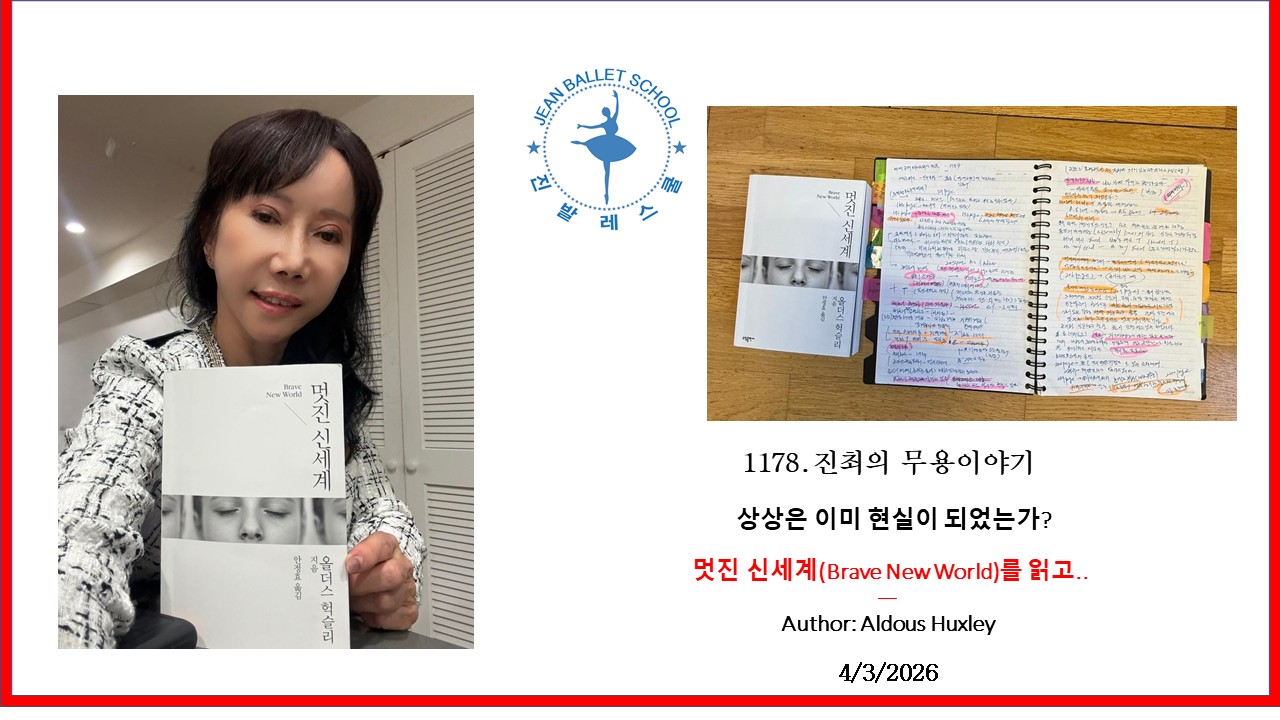
이 때문에 도덕경을 다시 펼쳐 드는 일은 낯설고도 조심스러웠다. 올 3월, 한국을 방문했을 때 교보문고에 들러 다시 도덕경을 집어 들었지만, 처음 읽은 책은 생각보다 쉽지 않았다. 이에 조금 더 쉬운 길을 찾게 되었고, 청소년을 위한 동양 철학사를 함께 읽으며 얇았던 지식을 조금씩 넓혀가고자 했다. 그렇게 다시 읽기 시작한 도덕경은 전 세계에서 성경 다음으로 가장 많이 번역된 책으로 알려져 있다. 단 5,000자, 81장으로 이루어진 짧은 글이지만 2,600년의 시간을 건너 수많은 해석으로 이어져 왔고, 그 이유가 바로 그 안에 담긴 깊은 함축과 메타포 때문이라는 것을 비로소 알게 되었다.
이 짧은 책이 동양을 넘어 서양 사상가들에게까지 영향을 주었다는 점도 인상 깊었다. 마르틴 하이데거와 칼 융, 그리고 특히 프리드리히 니체의 사유가 떠올랐다. 도덕경 속 노자는 설명하지 않는다. 설득하려 들지도 않는다. 그저 단정적으로 말한다. “성인은 이렇다.” “이렇게 하면 실패하지 않는다.” 이미 답을 알고 있는 사람처럼 결론을 던진다. 그 어조가 낯설지 않았다. 곧바로 니체가 떠올랐다. “나는 왜 이렇게 똑똑한가.” “이 사람을 보라.” 선언하듯 자신을 드러내던 그 문장들 속에서, 그의 사유 역시 이미 노자의 문장 속에서 시작되고 있었음을 깨달았다.
우리가 흔히 쓰는 “천리길도 한 걸음부터”라는 말이 도덕경 제64장에서 나왔다는 사실 역시 이번에야 알게 되었다. 익숙한 문장 하나에도 깊은 뿌리가 있었다. 한 달 동안 이 책과 씨름하며 느낀 것은 분명했다. 도덕경은 쉽게 이해되는 책이 아니다. 읽을수록 내가 이해한 것은 극히 일부에 불과하다는 생각이 든다. 마치 거대한 빙산의 일각을 스쳐 지나간 듯한 느낌이다. 도덕경 제14장에서 말하듯, 보려 해도 보이지 않고 잡으려 해도 잡히지 않는 것, 가장 본질적인 것은 드러나지 않는다.
그 가운데 가장 오래 남은 사유는 ‘물’이었다. 도덕경 제8장의 상선약수. 물은 다투지 않고 낮은 곳으로 흐르며 모든 것을 이롭게 한다. 문득 무용이 떠올랐다. 힘으로 밀어붙이는 동작이 아니라 물처럼 이어지는 흐름, 애쓰지 않을 때 더 자연스러워지고 힘을 빼야 비로소 살아나는 움직임. 우리가 무대 위에서 평생을 걸쳐 추구해 온 것도 바로 그 모습이었다. 어쩌면 춤이란 보이는 동작을 만드는 일이 아니라, 보이지 않는 흐름을 몸으로 따라가는 일인지도 모른다.
그래서 나는 확신하게 되었다. 동양 철학에 이제 막 입문하게 되었고, 이 사유들이 내 삶을 조금씩 바꾸어 갈 것이라는 것을. 다양한 책을 읽는다는 것은 단지 지식을 쌓는 일이 아니라, 보이지 않던 세계를 하나씩 열어가는 일이라는 것을. 결국 삶도, 춤도, 보이지 않는 흐름을 따라가는 일이다.
Following the Invisible Flow — Life and Dance
Reflections on reading the Tao Te Ching
Following an invisible flow—that is life, and that is dance.
Through a reading group, I read Zhuangzi last year, and this time I began reading the Tao Te Ching. In doing so, I found myself once again standing before the world of Eastern philosophy. Looking back, my understanding of classical Eastern texts had not been very deep. It was little more than a few lines that had brushed past me in school textbooks. Yet there is one vivid memory that remains. Every morning, I would unfold the sports newspaper, and in one corner was a serialized comic version of Romance of the Three Kingdoms by Go Woo-young. Curious about what would happen next, I would always reach for the newspaper first. In those days, I encountered stories before I encountered philosophy.
For this reason, opening the Tao Te Ching again felt both unfamiliar and cautious. This past March, during my visit to Korea, I stopped by Kyobo Bookstore and picked it up once more, but the first attempt was not as easy as I had expected. So I sought a gentler path, reading alongside an introductory text on Eastern philosophy for young readers, gradually expanding what had once been a thin understanding.
The Tao Te Ching, which I resumed reading in this way, is known as one of the most translated books in the world after the Bible. Though it consists of only about 5,000 characters across 81 chapters, it has traveled across 2,600 years, giving rise to countless interpretations. Only now do I begin to understand that its enduring power lies in its depth of implication and metaphor.
It was also striking to realize that this small book has influenced not only Eastern thought but Western thinkers as well. The philosophies of Martin Heidegger, Carl Jung, and especially Friedrich Nietzsche came to mind. Laozi does not explain. He does not attempt to persuade. He simply declares: “The sage is thus.” “Act in this way, and you will not fail.” His tone resembles that of someone who already knows the answer. It did not feel unfamiliar. Immediately, I thought of Nietzsche—“Why am I so wise?” “Behold this man.” In those declarative sentences, I sensed that his way of thinking had already begun within the words of Laozi.
I also learned, only this time, that the familiar phrase “A journey of a thousand miles begins with a single step” originates from Chapter 64 of the Tao Te Ching. Even a sentence we use so casually carries deep roots. After a month of wrestling with this text, one thing became clear: the Tao Te Ching is not a book that yields easily. The more I read, the more I feel that what I understand is only a fragment—like brushing past the tip of a vast iceberg. As Chapter 14 suggests, what is most essential cannot be seen, cannot be grasped. It does not reveal itself.
Among all its ideas, what lingered most deeply with me was water. In Chapter 8, “The highest good is like water.” Water does not contend; it flows to the lowest places and benefits all things. In that moment, I thought of dance. Not movement driven by force, but a flow that connects like water. Movements that become more natural when we stop trying, that come alive only when we release tension. Is that not what we have pursued our entire lives on stage?
Perhaps dance is not about creating visible movements, but about following an invisible flow with the body.
And so I have come to believe this: I am only just beginning my journey into Eastern philosophy, and these thoughts will slowly reshape my life. Reading different books is not merely about accumulating knowledge—it is about opening unseen worlds, one by one. In the end, both life and dance are acts of following an invisible flow.
www.koadance.org www.balletjean.com
진발레스쿨
3727 West. 6th Street #607. LA CA 90020
Tel: 323-428-4429
#진발레스쿨 #한미무용연합 #진최의무용이야기 #고전의세계 #도덕경 #동양철학
#JeanBalletSchool #KOADanceFederation #JinChoiDanceStory #WorldOfClassics #TaoTeChing #EasternPhilosophy